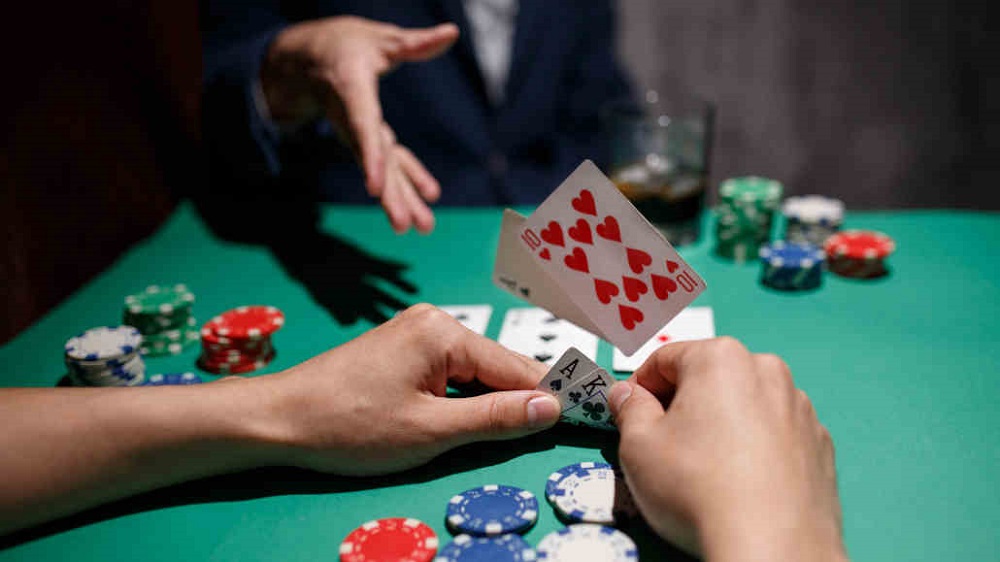

Introduction: More Than a Game of Cards
Few games have woven themselves so deeply into the fabric of culture, language, and lore as poker. It is not merely a card game but a distillation of risk, strategy, deception, and human insight. From the smoky backrooms of the Wild West to glittering televised tournaments watched by millions, poker has evolved into a symbol of calculated risk and nerve—where a glance, a raise, or a folded hand can speak volumes.
Poker’s enduring charm lies not just in the hands dealt but in what players do with them. In its best moments, poker is an arena where psychology duels with mathematics, where luck meets logic, and where the player’s true opponent is not the deck but the minds across the table.
A Brief History: From Riverboats to the World Stage
Poker’s exact origins are debated, but most historians trace its roots to a melting pot of card games from Europe and Persia. The modern game took shape in 19th-century America, spreading along the Mississippi River aboard gambling riverboats, where soldiers and travelers tested their mettle for stakes big and small.
In the 20th century, poker found a permanent home in the casinos of Las Vegas. It was here, in 1970, that the World Series of Poker (WSOP) was born—a tournament that turned local card sharks into global celebrities and poker into a spectator sport.
Today, poker has transcended dusty saloons and neon-lit halls. The internet gave birth to online poker rooms, where players from every corner of the globe can battle anonymously for virtual chips or life-changing prize pools.
The Core of the Game: Rules with Endless Possibilities
At its simplest, poker revolves around forming the best hand from a standard deck of 52 cards. Yet within this simplicity lies an endless well of strategy and nuance.
Popular Variants:
-
Texas Hold’em: The most popular version, where players use two hole cards and five community cards.
-
Omaha: Similar to Hold’em but with four hole cards, creating more complex hand combinations.
-
Seven-Card Stud: Once the king of poker before Hold’em took over; no community cards, just individual hands.
-
Draw Poker: Players are dealt a complete hand and can discard and draw new cards, adding a layer of hidden strategy.
Though the rules differ, the core premise remains: outwit your opponents and claim the pot.
The Strategy: Odds, Bluffing, and the Long Game
What sets poker apart from pure games of chance is the depth of skill it rewards. While luck dictates the cards, it is how a player bets, bluffs, and reads the table that determines long-term success.
Fundamental Poker Skills:
-
Probability and Pot Odds: Skilled players calculate the odds of completing a hand versus the pot size, making decisions rooted in mathematics.
-
Position: Where one sits at the table matters—acting later in a betting round gives valuable information about others’ intentions.
-
Bluffing: The art of deception—convincing opponents you have a stronger or weaker hand than reality demands impeccable timing and nerve.
-
Reading Opponents: Subtle tells, betting patterns, and psychology transform poker from cards to combat of the mind.
Poker pros thrive on discipline. Knowing when to fold a strong-looking hand or when to push an opponent off theirs can mean the difference between a hero and a cautionary tale.
The Psychology: Poker’s Invisible Battlefield
To an outsider, poker might appear as a cold calculation of odds. But seasoned players know the real action unfolds behind the chips: in the glances, gestures, and calculated silence.
The Psychological Game:
-
Tilt: Emotional instability after a bad beat can ruin even the best player—avoiding tilt is crucial to staying sharp.
-
Table Image: Players cultivate reputations—tight, aggressive, loose, unpredictable—and exploit how others perceive them.
-
The Bluff and Counter-Bluff: Players constantly gauge who is bluffing, double-bluffing, or simply playing the odds.
This psychological dance is why many argue that poker is not gambling in the purest sense but a mind sport—one where success is measured over thousands of hands, not fleeting luck.
Poker in the Digital Era: A New Golden Age
The early 2000s saw a poker boom that changed the game forever. Chris Moneymaker’s improbable WSOP win in 2003, as an amateur who qualified online, sparked an explosion in online poker rooms. Suddenly, players could test their skills at any time, against opponents across continents.
Why Online Poker Thrives:
-
Accessibility: Anyone with an internet connection can play for pennies or millions.
-
Variety: Online platforms offer countless variants and stakes.
-
Multi-Tabling: Skilled players can play multiple games simultaneously, multiplying potential earnings.
-
Tournaments: From sit-and-go’s to major online series with massive prize pools, online poker delivers the thrill of big-league competition.
Today’s online poker scene is more sophisticated than ever, with live-streamed tables, training platforms, and an entire ecosystem of content creators and professional streamers who have made watching poker a form of entertainment in its own right.
The Culture: Legends, Language, and Lifestyle
Poker’s influence extends far beyond the felt. Its language—“all-in,” “bluff,” “call your bluff”—has seeped into everyday speech. Its icons, from Doyle Brunson to Daniel Negreanu, are as revered as any athlete. Films like Rounders and TV shows like the World Poker Tour have immortalized the game’s tension and glamour.
At its highest levels, poker is a lifestyle. Professionals travel the globe chasing tournaments, bankrolls, and the elusive bracelet or title that cements their place in poker lore. But whether played for millions or for pennies among friends, poker remains grounded in its fundamental appeal—a contest of wits and nerve where anyone can win on a given night.
Responsible Play: The Thin Line
Despite its skillful elements, poker is not immune to the pitfalls of gambling addiction. The promise of a big win can lure players into reckless play, while the ease of online poker makes it accessible 24/7. Responsible bankroll management, self-awareness, and knowing when to step back are vital to keeping poker an engaging pursuit rather than a destructive habit.
Conclusion: Why Poker Endures
Poker’s timeless magic lies in its perfect balance—simple to learn, impossible to master. It is a game that rewards cunning over brute luck, that transforms a deck of cards into a canvas for psychology, strategy, and human drama.
In poker, fortunes are made, egos are tested, and legends are born—not solely through the cards dealt but through the stories players write in every hand. In a world driven by certainty and control, poker reminds us that sometimes the greatest thrill is not in what we hold, but in what we make others believe we hold.
So, whether you play for pennies on kitchen tables or for gold bracelets under bright Vegas lights, poker’s invitation remains timeless: sit down, ante up, and reveal not just your cards—but yourself.