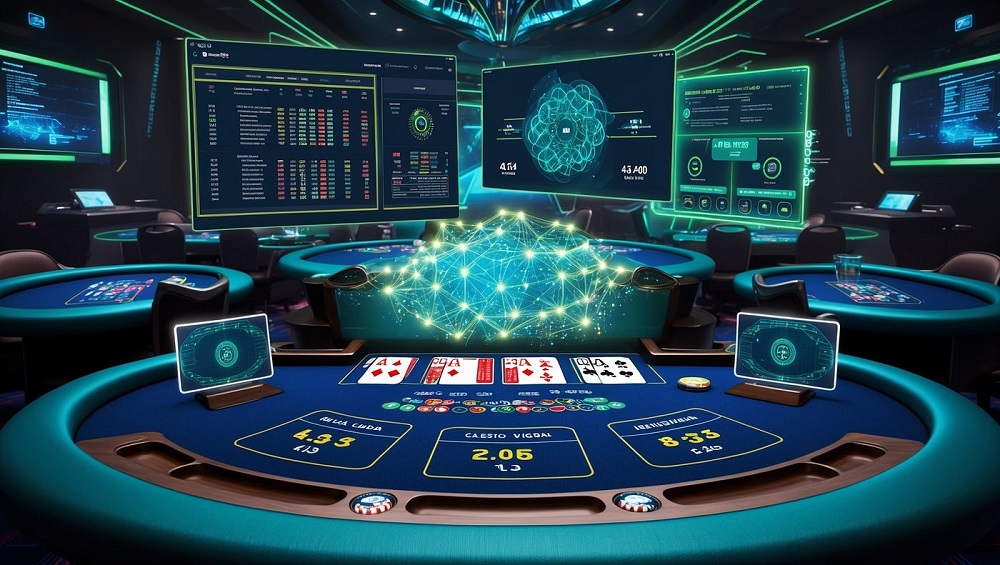

Introduction: More Than Just a Card Game
In the glittering halls of Monte Carlo or the buzzing floors of Las Vegas, there is one table that attracts seasoned strategists and curious newcomers alike: the blackjack table. It stands apart from the roulette wheels and slot machines with its unassuming layout and quietly intense atmosphere. While most casino games leave players at the mercy of pure chance, blackjack offers something rarer—a battleground where logic, mathematics, and human psychology collide.
Blackjack, or Twenty-One as it was once widely known, is deceptively simple to learn yet infinitely complex to master. Its enduring popularity rests not merely on the cards dealt but on the decisions players make with each hand. In the realm of gambling, blackjack holds a special place as a contest between the player’s mind and the house’s odds, with every hand presenting the same timeless question: do you double down, hit, or walk away?
The Origins: From European Courts to Casino Floors
The precise origin of blackjack is shrouded in a haze of competing stories, but historians generally trace its lineage back to 17th-century France. There, an early version known as Vingt-et-Un—French for “twenty-one”—was played among aristocrats and soldiers alike. The game migrated to North America in the 18th century, gradually evolving as house rules and betting customs adapted to local tastes.
The term “blackjack” itself has a distinctly American twist. Early U.S. casinos devised a special payout to attract players: if a hand contained the Ace of Spades and a black Jack (either clubs or spades), the player received a bonus payout. The bonus faded, but the catchy name endured, cementing blackjack’s identity for generations to come.
Understanding the Game: Rules that Reward Smart Play
Blackjack’s charm lies in its clarity. The goal is simple: beat the dealer’s hand without exceeding twenty-one. But within that simplicity hides a rich layer of decision-making that has inspired decades of study.
How Blackjack Works:
-
Card Values: Cards two through ten are worth their face value; Jacks, Queens, and Kings are worth ten; Aces are worth either one or eleven, depending on which benefits the hand.
-
The Deal: Players and the dealer each receive two cards. Players’ cards are dealt face up, while the dealer typically shows one card face up and keeps the other face down.
-
Player Actions: Players choose to “hit” (draw another card) or “stand” (keep their current total). Depending on house rules, other options include doubling down, splitting pairs, or surrendering.
-
Winning: The player wins by getting closer to twenty-one than the dealer without “busting” (going over twenty-one). If the dealer busts and the player doesn’t, the player also wins.
Though luck determines the cards, a thoughtful player can significantly improve their odds by following optimal strategy—a rarity in the casino world.
The House Edge: Can Blackjack Be Beaten?
Blackjack’s greatest allure is that it can be one of the lowest house edge games when played with precision. While slot machines might offer a return to player (RTP) of around 90-95%, basic strategy blackjack can shrink the house’s advantage to less than 1%.
Keys to Reducing the House Edge:
-
Basic Strategy: Developed through probability analysis, basic strategy tells players the mathematically best move for every possible hand combination.
-
Card Counting: Famously popularized in books and Hollywood films, this technique involves tracking high and low cards remaining in the deck to adjust betting and play. While not illegal, it is frowned upon by casinos and has led to countless tales of dramatic bans and ingenious countermeasures.
-
Betting Discipline: Knowing when to walk away is as important as knowing when to hit or stand.
Card counting aside, most winning blackjack players master the art of discipline and mathematical consistency, trusting the odds over instinct or emotion.
The Psychology: A Game of Subtle Tension
Unlike games driven entirely by chance, blackjack thrives on subtle mind games. The dealer’s visible card sets the stage for every decision, forcing players to think not just about their own hand but about what might lie hidden in the dealer’s hole card.
The Human Element:
-
Reading the Table: Skilled players keep an eye on the actions of others, gleaning clues about remaining cards and possible dealer outcomes.
-
Handling Pressure: The tension of a large wager can rattle even seasoned players. Remaining calm and disciplined is a skill in itself.
-
Dealing with Tilt: Losing streaks are inevitable. How a player responds—whether with reckless bets or calculated patience—often determines their fate.
These nuances give blackjack a unique psychological depth, blending cold probability with the warmth of human unpredictability.
Blackjack in the Modern Era: From Felt Tables to Digital Screens
As casinos embraced the internet age, blackjack naturally crossed over to digital platforms. Today, online blackjack is one of the most-played casino games worldwide, with countless variations available at the click of a button.
Why Online Blackjack Thrives:
-
Accessibility: Players can join a virtual table any time, anywhere.
-
Variety: From classic single-deck blackjack to innovative variants with side bets and jackpots.
-
Live Dealer Games: High-definition streams connect players with real dealers, replicating the in-person experience from the comfort of home.
Online blackjack appeals to beginners and veterans alike—some use digital platforms to practice basic strategy or card counting in low-stakes games before stepping into a physical casino.
Responsible Play: The Fine Line Between Entertainment and Risk
As with any form of gambling, blackjack must be approached with respect and caution. The game’s low house edge can tempt players to overestimate their odds, while the thrill of a near-miss can lure them into chasing losses.
Best Practices for Responsible Blackjack:
-
Set a Clear Budget: Decide in advance what you can afford to lose.
-
Stick to Strategy: Resist the temptation to deviate from basic strategy on a hunch.
-
Know When to Walk Away: True discipline means stepping away, whether you’re up or down.
-
Understand the Odds: Even perfect play can’t overcome variance in the short term.
Conclusion: The Timeless Pull of Twenty-One
At its core, blackjack endures because it balances chance with skill in a way that no slot machine or roulette wheel can replicate. Each hand invites a fresh battle of odds, intuition, and restraint—a quiet duel that has captivated players for centuries.
Whether played in a marble-floored casino in Monaco, on the bustling Strip of Las Vegas, or at a kitchen table among friends, blackjack remains timeless. The cards may fall where they may, but the choice to hit, stand, double down, or fold rests entirely in your hands. And perhaps that is blackjack’s greatest gift: a game where the stakes are real, the math is clear, and the thrill lies not only in the cards dealt—but in how you choose to play them.