Introduction: A Game of Skill Amidst the Shuffle
Among the countless games of chance that fill casino floors and flicker across online screens, few carry the same air of intrigue and sophistication as blackjack. Known by its evocative alternative name, Twenty-One, blackjack is a game that dances on the delicate edge between luck and skill. Its simplicity in concept—beat the dealer’s hand without exceeding twenty-one—belies a world of psychological nuance, razor-sharp probability, and enduring allure.
Far from being a mere pastime for tourists at glittering tables, blackjack has, for decades, been the darling of mathematicians, professional gamblers, and casual players alike. To explore blackjack is to step into a world where odds can be bent, decisions matter, and fortune favors both the bold and the disciplined.
A Brief History: From French Salons to Las Vegas Lights
Blackjack’s roots trace back to 17th-century France, where a card game called Vingt-et-Un (Twenty-One) captivated noblemen and courtiers. The game crossed the Atlantic with European settlers, evolving over centuries in American gambling halls and saloons.
The name “blackjack” emerged from an early casino promotion: players were paid extra if they held an Ace of Spades and a black Jack (either the Jack of Spades or Clubs). Though the bonus vanished, the catchy name endured. By the mid-20th century, blackjack had become a fixture in Las Vegas, where its blend of chance and strategy cemented its status as a casino staple.
The Basics: Rules that Reward Foresight
At its heart, blackjack pits each player against the dealer in a contest of wits and nerve. The objective is elegantly simple—draw cards to reach a total as close to twenty-one as possible without going over.
Core Rules of Blackjack:
-
Card Values: Number cards count as their face value; face cards count as ten; Aces can be one or eleven.
-
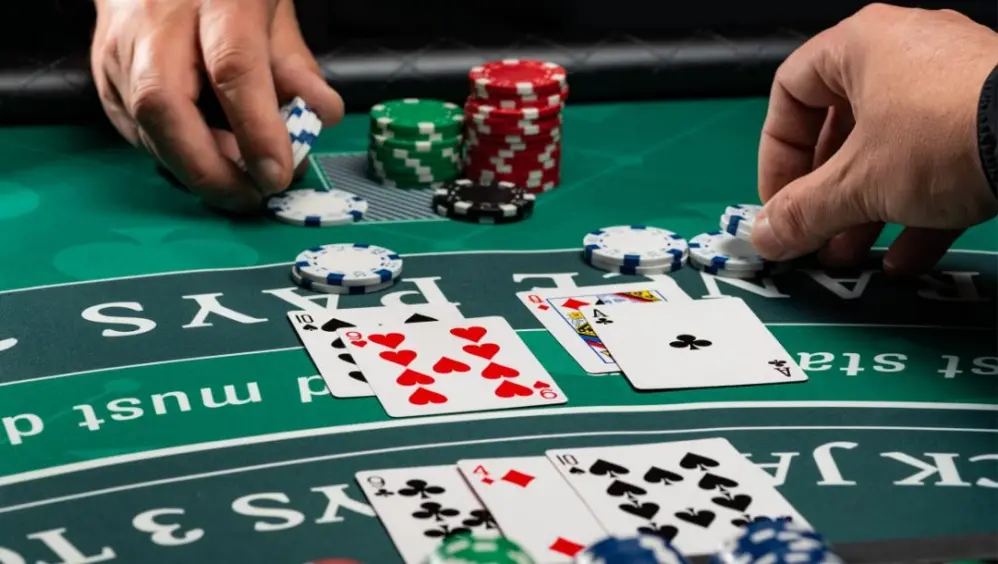
The Deal: Each player receives two cards, as does the dealer (typically one card face up, one face down).
-
The Play: Players choose to “hit” (take another card) or “stand” (keep their total). Additional options include doubling down, splitting pairs, or surrendering—each adding layers of strategy.
-
Winning: Beat the dealer’s total without exceeding twenty-one. If the dealer busts (goes over twenty-one) and the player does not, the player wins.
Though luck dictates the cards dealt, a sharp player can influence outcomes through choices made with each draw and decision.
The Strategy: A Game that Rewards the Thinking Player
Unlike many casino games where chance reigns supreme, blackjack uniquely rewards strategic play. Over the decades, the game has birthed countless books, courses, and even cult-like followings of professional players who have turned the tables—sometimes literally—on the house.
Key Elements of Winning Strategy:
-
Basic Strategy: A mathematically derived decision chart that tells players the statistically best move for every possible hand. Mastering it minimizes the house edge.
-
Card Counting: Famously popularized by teams like the MIT Blackjack Team, this technique involves tracking high and low cards remaining in the deck. When the deck is rich in tens and Aces, the odds tilt slightly in the player’s favor.
-
Bankroll Management: Sensible betting limits and discipline are essential. Without them, even the best strategy crumbles under the weight of reckless wagers.
While casinos have taken steps to counter card counting—using multiple decks, automatic shufflers, and watchful eyes—its legend persists, fueling books, movies, and endless fascination.
The Psychology: The Player Versus the House
Beyond numbers and odds, blackjack is a game of psychology. Every decision—hit, stand, double—must weigh the odds and anticipate the dealer’s likely hand. Tension mounts with each card drawn, creating moments of suspense that no slot machine can replicate.
Why Players Keep Coming Back:
-
Sense of Control: Unlike roulette or slots, blackjack offers players a genuine sense of agency.
-
Beating the System: The thrill of outwitting the casino is irresistible to many.
-
Social Element: Shared tables, light banter, and the subtle camaraderie among players make for an engaging experience.
Blackjack in the Digital Age: From Felt Tables to Online Streams
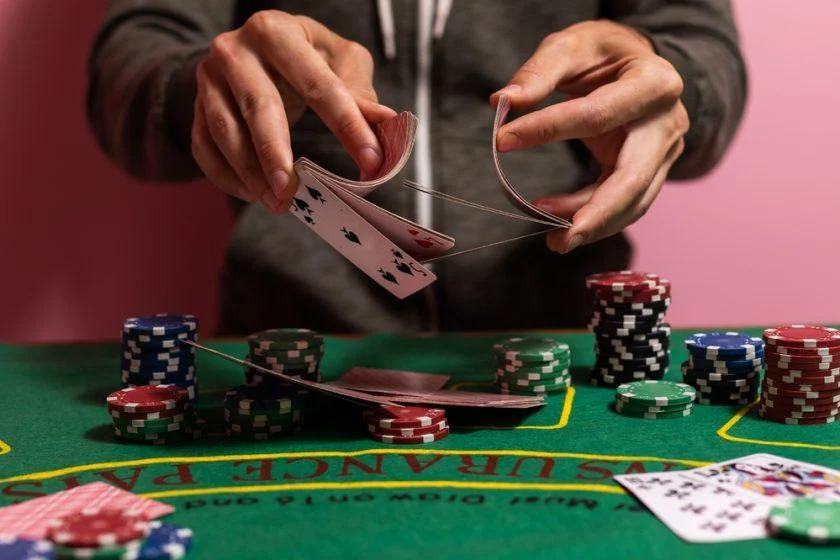
The advent of online casinos has reshaped blackjack, bringing the green felt and dealer’s shuffle to players’ screens worldwide. Today, enthusiasts can join live dealer blackjack games, interact with real croupiers via video, and test strategies in virtual practice rooms before risking real stakes.
Online Blackjack’s Modern Appeal:
-
Convenience: Play anywhere, anytime, on mobile or desktop.
-
Variety: From classic single-deck games to exotic variations like Spanish 21 or Blackjack Switch.
-
Low Stakes: Online tables often allow for smaller minimum bets, making the game accessible to beginners.
Live-streaming technology has further blurred the line between physical and virtual, with high-definition broadcasts replicating the thrill of sitting at a real table.
The Allure of Blackjack in Pop Culture
No discussion of blackjack is complete without acknowledging its star turn in popular culture. Countless films, novels, and anecdotes have immortalized the game. From the MIT students immortalized in 21 to the iconic blackjack scenes in Rain Man and Casino, blackjack remains a symbol of wit triumphing over odds—an appealing fantasy for any risk-taker.
The Caveat: Responsible Play Matters
Yet, for all its glamour, blackjack must be approached with the same caution as any game involving real money. The line between healthy recreation and ruinous compulsion is thin. Casinos—online and off—are designed to profit, and the house edge, though slimmer than in many games, never vanishes entirely.
Tips for Responsible Play:
-
Stick to a budget and never chase losses.
-
Learn basic strategy before wagering real money.
-
Take breaks and step away if emotion clouds judgment.
-
Remember: blackjack is entertainment, not a salary.
Conclusion: The Enduring Seduction of Twenty-One
In an industry driven by flashing lights and whirring slots, blackjack retains a subtle elegance. It is at once timeless and ever-evolving, as appealing to the first-time tourist in Vegas as to the seasoned strategist at a high-stakes table.
To sit down at a blackjack table is to join a legacy stretching back centuries—an invitation to test one’s nerve, calculation, and restraint against the immutable shuffle of the deck. It is this heady mix of chance, skill, and human psychology that ensures blackjack’s place in the pantheon of games that never grow old, only more intriguing with each hand dealt.